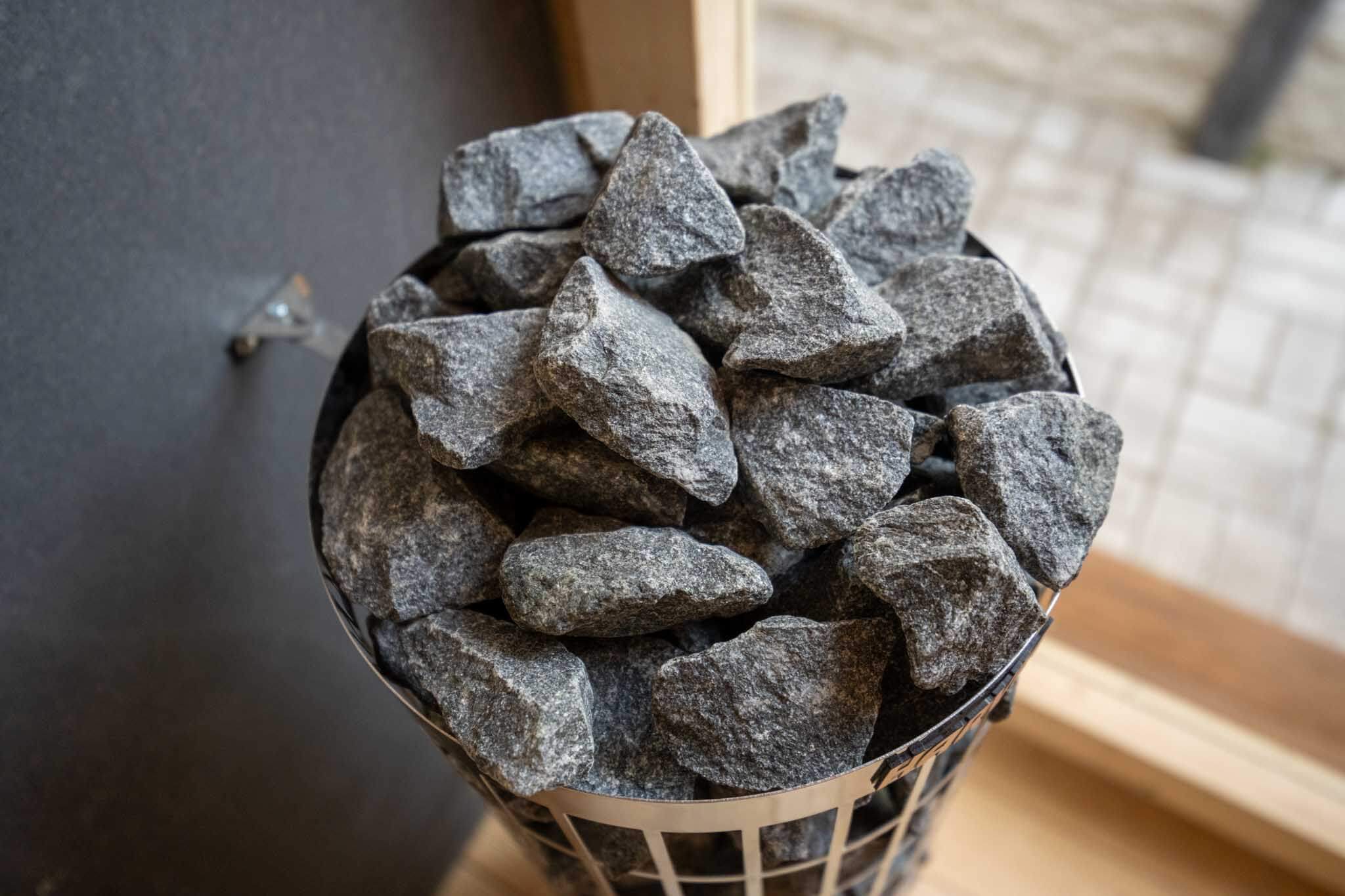
A few stone fragments beneath the heater may seem minor. They are worth checking: repeated heating and cooling degrades stones, and small pieces can fill the gaps needed for airflow.
Maintenance is more than topping up the gap at the top with a new bag. You also need to see what has accumulated at the bottom of the compartment.
Which signs call for an inspection?
- Stone fragments or dust beneath the heater.
- Cracked stones or stones that crumble easily during inspection after cooling.
- A visibly lower stone level than at initial installation.
- Slower heating than before under comparable conditions.
The last sign alone does not prove the stones are the cause. Available power, controls and ventilation can affect heating. Do not test electric elements by switching on a heater emptied of stones.
Once a year or after every season?
A common technical guideline is inspection and restacking at least annually, more often with intensive use. A family sauna’s schedule is not enough for a sauna used several times a day.
Inspection does not automatically mean discarding every stone. Intact stones approved for the heater can be kept after cleaning if the manual permits; deteriorated ones must be replaced. Record the date and their condition to give the next inspection a real reference.
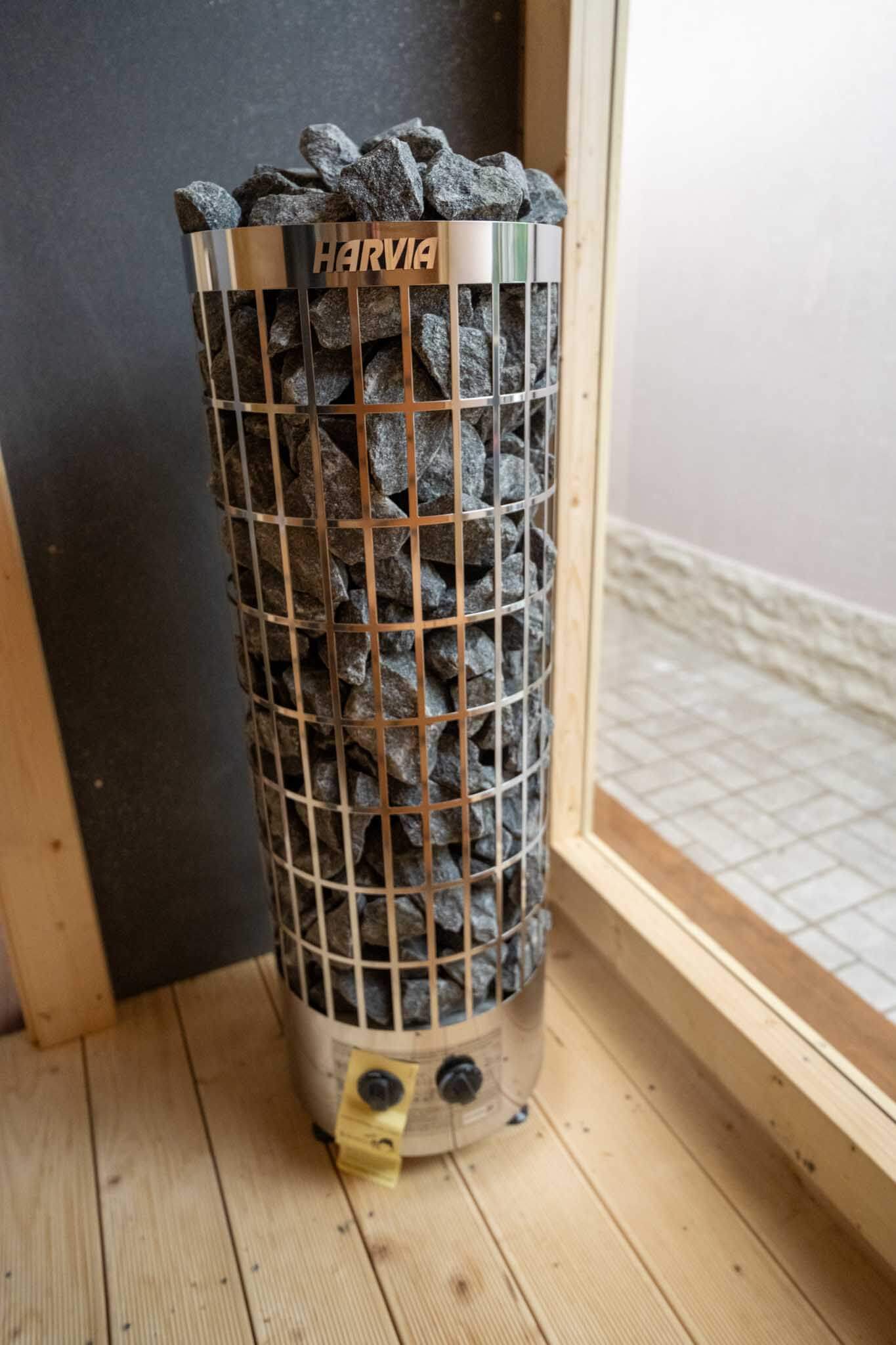
How to service the stones with the heater cold
- Switch off the electrical supply and ensure the heater cannot start from the control or timer. Let it cool completely.
- Check the manual for the approved stone type, shape, size and quantity. Do not choose only by colour or bag volume.
- Remove the stones carefully without bending the elements. Remove accumulated fragments using the manufacturer’s permitted method.
- Separate deteriorated stones. Rinse dust off those to be installed and prepare them as instructed.
- Restack according to the heater’s layout. Do not throw stones into the compartment, wedge them between elements or pile them above the permitted level.
If you notice deformed elements, damaged cables or signs of overheating, stop maintenance here and have a specialist inspect it.
Why must they not be packed tightly?
Stones that are too small or compacted can restrict air. The heater may heat the cabin less effectively while the elements operate at higher temperatures. This does not mean leaving the elements exposed is the solution.
The correct layout depends on the heater’s construction: some require specific outer coverage and internal air gaps. Follow both requirements. Do not turn ‘allow air to circulate’ into ‘use as few stones as possible’.
Can I use river stones or decorative stones alone?
Do not use stones without confirmation that they are compatible with the heater. Permitted shapes and materials vary between appliances, and a decorative layer may have position and quantity limits. Do not replace the working stone load with a material chosen only for appearance.
For a recommendation, send the NOMAD team the heater label and photos of the cold compartment. Also read how to calculate an electric sauna’s energy consumption.
Technical sources: stone selection, inspection and stacking; maintenance frequency in a family sauna; the effect of compaction on airflow. The heater’s installation instructions take priority.